Journal
Everything you ever wanted to know about alternative photography, historic print making, and the art of shaping light.
Glossary →
Cyanotype and Aquaprint Troubleshooting: Diagnose and Fix Failed Prints
Pale prints, images that wash away, veiled highlights, gum layers that won't hold: symptom, cause and fix — backed by documented process parameters.

Cyanotype or Aquaprint: Which Process Should You Start With?
Cyanotype at €39 or Aquaprint at €69-79? Difficulty, look, time, budget and safety compared to help you choose your first alternative printing kit.

Is Cyanotype Toxic or Dangerous? The Honest Answer, Safety Data Sheets in Hand
No, cyanotype is not toxic under printing conditions: two iron salts, no silver, no dichromate. The real precautions, backed by safety data sheets.

The Digital Negative: The Guide for Every Contact Printing Process
Negative size, transparency film, inversion, mirroring, linearization curve: the complete guide to digital negatives for contact printing processes.
Gum Bichromate: The Pictorialist Process, Without the Dichromate
Gum bichromate, the signature process of the Pictorialists — at the cost of dichromate (a CMR carcinogen). Its history, and Aquaprint: the same gum print, without the toxic salt.

Bromoil: The Pictorialists’ Hand-Inked Oil Print, Without the Bichromate
Bromoil, the Pictorialists’ hand-inked oil print — at the cost of a bichromate salt. Its history, and the Vision Picturale bromoil, without it.

Carbon Printing: Photography’s Most Permanent Black, Without the Dichromate
Carbon printing: photography’s deepest, most permanent blacks, once made with dichromate. The Vision Picturale carbon process, without that CMR carcinogen.

Resinotype: The Glazed Finish of Pigment Printing, Without Bichromate
Resinotype seals pigment inside a resin: a glazed print, somewhere between photograph and enamel. The Vision Picturale version, without bichromate or solvents.

How to Make Your First Cyanotype at Home
Discover the simple steps to make your first Prussian-blue alternative photographic print — no darkroom, no expensive equipment.
How to Choose the Right Paper for Cyanotype and Alternative Printing
Weight, sizing, acidity: the complete guide to choosing the right watercolor or art paper for your cyanotypes and gum bichromate prints.

Alternative Photographic Processes: The Complete Guide
Cyanotype, gum bichromate, bromoil, carbon, resinotype… Discover the 9 most-practiced alternative processes, their distinctive looks, and how to choose yours.

Gum Bichromate: Making Your First Print — Without Bichromate, With Aquaprint
Traditional gum bichromate relies on potassium bichromate, a toxic compound. Vision Picturale reformulated the process as Aquaprint — the same painterly result, 100% practicable in a kitchen.
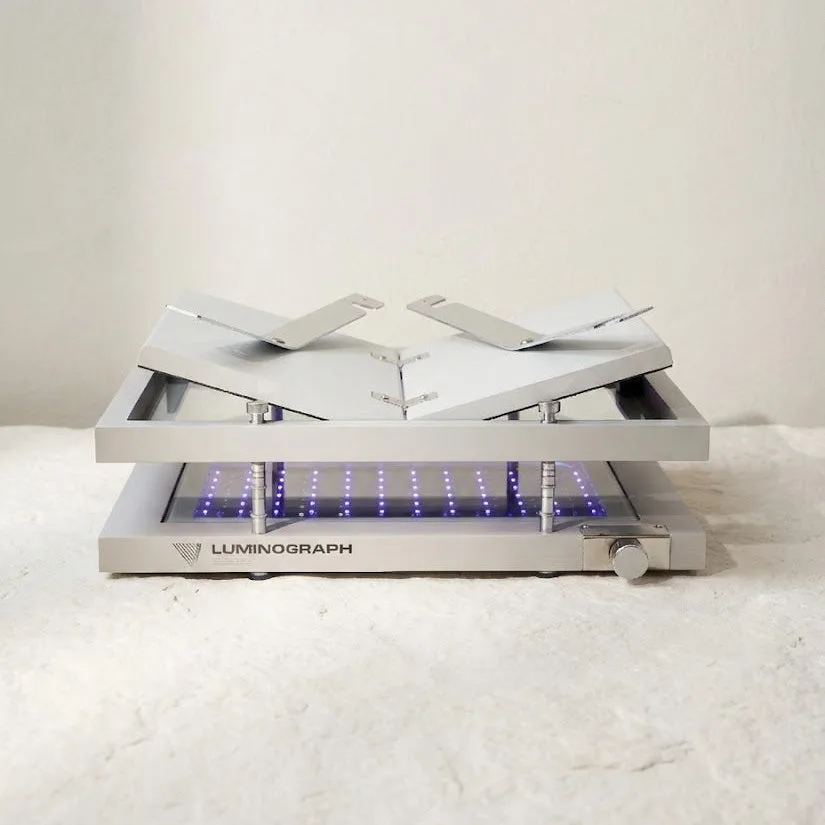
Choosing a UV Exposure Unit for Alternative Photography
Sunlight, DIY UV box, fluorescent tube, or professional exposure unit: how to choose the right UV source for cyanotype, gum printing, and other alternative processes.